Running Low Before the Appointment: How to Close a Diuretic Refill Gap Safely
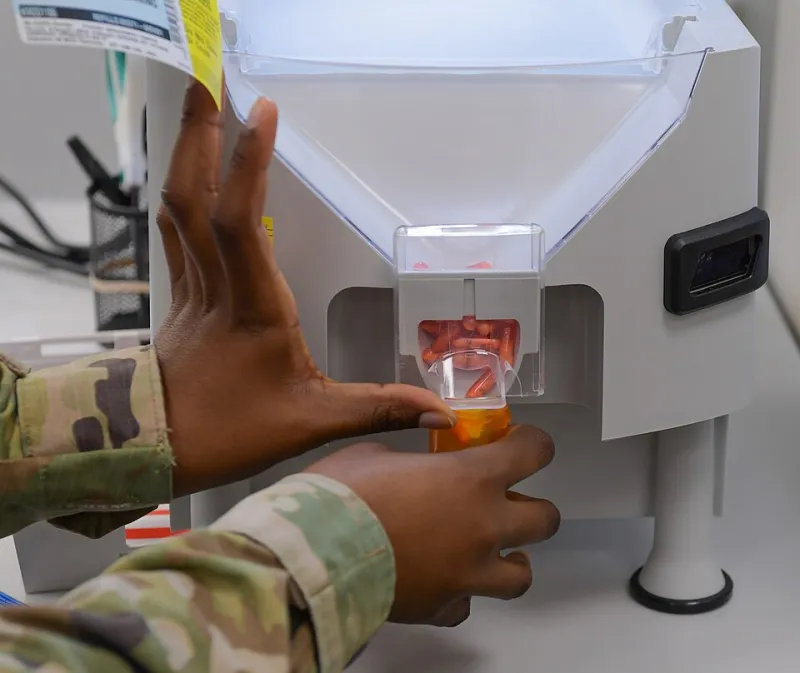
Photo: U.S. Air Force photo by Airman Trevor Calvert, Public domain, via Wikimedia Commons
A diuretic prescription can run out at the worst possible moment: the bottle is nearly empty, the appointment has been moved, and the pharmacy says it needs authorization. For patients who rely on diuretic therapy for blood pressure, heart failure, edema, or another chronic condition, a refill gap is not just a scheduling nuisance. It can disrupt fluid balance and create avoidable symptoms.
The solution is not to panic or improvise. It is to work through a sequence: confirm the supply, contact the pharmacy, contact the prescriber, and use a legitimate bridge option if one is available. The following plan is designed for real life, including the days when the appointment is rescheduled and the pharmacy is short-staffed.
Step One: Calculate the Real Run-Out Date
Do not estimate from memory. Count the remaining pills and compare that number with the directions on the label. If the label says one tablet daily and there are five tablets left, the supply is five days, not one week. Write down the date the last dose will be taken.
Check the prescription expiration date as well. A prescription can be refillable but expired, or it can have refills remaining but require a new authorization because of state rules or pharmacy policy. The pharmacy label and app usually show both pieces of information.
Step Two: Call the Pharmacy First
The pharmacy is often the fastest source of accurate information. Ask whether the prescription has refills on file, whether the prescriber has responded to any authorization request, and whether the drug is in stock. If the pharmacy is out of stock, ask about a partial fill, a different manufacturer, or a transfer to another location in the same chain.
Ask specifically whether a short emergency supply is possible while the prescriber is contacted. Rules vary by state and pharmacy policy, so the answer may be no. Even then, the pharmacist can often send a refill request or help you understand the next step. Do not demand an emergency refill as a right; ask whether it is an option under current rules.
Step Three: Contact the Prescriber's Office
Use the patient portal if one is available, then follow up by phone if the refill is urgent. State the medication, strength, directions, pharmacy, and the date the supply runs out. Ask for one of three things: a new prescription, an early refill authorization, or a bridge supply to cover the gap until the next appointment.
If the appointment was rescheduled, say so directly. A clinician may be willing to send a short prescription or authorize a refill while the visit is moved. If the prescriber is unavailable, ask whether a covering clinician can review the request.
Step Four: If the Pharmacy Is Out of Stock
Ask the pharmacist to check nearby locations and whether a transfer is possible. A transfer can usually be done between pharmacies in the same chain, and sometimes between different chains, depending on state rules and the prescription. For a maintenance medication, a mail-order pharmacy may be an option, but it is not a same-day solution.
Ask whether a partial fill can be dispensed so you are not left with nothing. Ask whether the manufacturer has announced a backorder and when stock is expected. If the pharmacy offers a different strength or a different diuretic, do not accept it as a casual substitute. That change should be authorized by the prescriber.
What Not to Do During a Refill Gap
Do not skip doses to stretch the supply unless a clinician has told you to do so. Do not borrow a diuretic from a friend or family member. Do not split tablets unless the label or pharmacist confirms that the tablet is scored and safe to split. Do not use expired medication as a long-term solution. Do not double the next dose to make up for a missed one.
Be cautious with unverified online sellers. A legitimate online pharmacy will require a valid prescription and will connect you with a licensed pharmacist. A website that offers diuretics without a prescription or uses high-pressure marketing should be treated as a red flag.
Build a Refill Buffer That Fits Real Life
The most reliable protection is a buffer. Request refills seven to ten days before the last dose, not on the day the bottle is empty. Enroll in automatic refills if the pharmacy offers them, and check the app or automated call before assuming the refill is in progress. For stable maintenance therapy, ask whether a 90-day supply is appropriate and covered by insurance.
If you travel, carry enough medication in the original labeled containers and keep a written list of prescriptions. If you use multiple pharmacies, consolidate them when possible. A calendar reminder, a pill inventory, and a standing refill day can prevent the next gap before it starts.
A refill gap is best managed as a system problem, not a personal failure. Start early, document the dates, and use the pharmacist and prescriber as partners. LasixUN Health's prescription care approach emphasizes continuity: the goal is not just to fill a bottle, but to keep treatment uninterrupted.